Top 5 Reading Habits to Build Over the Holidays (That Actually Work)

Mark Day • 29 June 2025

Summer is a time to unwind—but for younger readers, it can also be a time when reading confidence quietly slips away. That “summer slide” is real, and it can make the return to school in September feel tougher than it needs to be.


The good news? A little bit of reading—done right—goes a long way. Here are five simple, realistic reading habits that parents and children can build over the holidays to keep reading fun, stress-free, and effective.


1. Create a “Read Anywhere” Routine

Reading doesn’t always need to be at a desk or before bed. Encourage children to read:

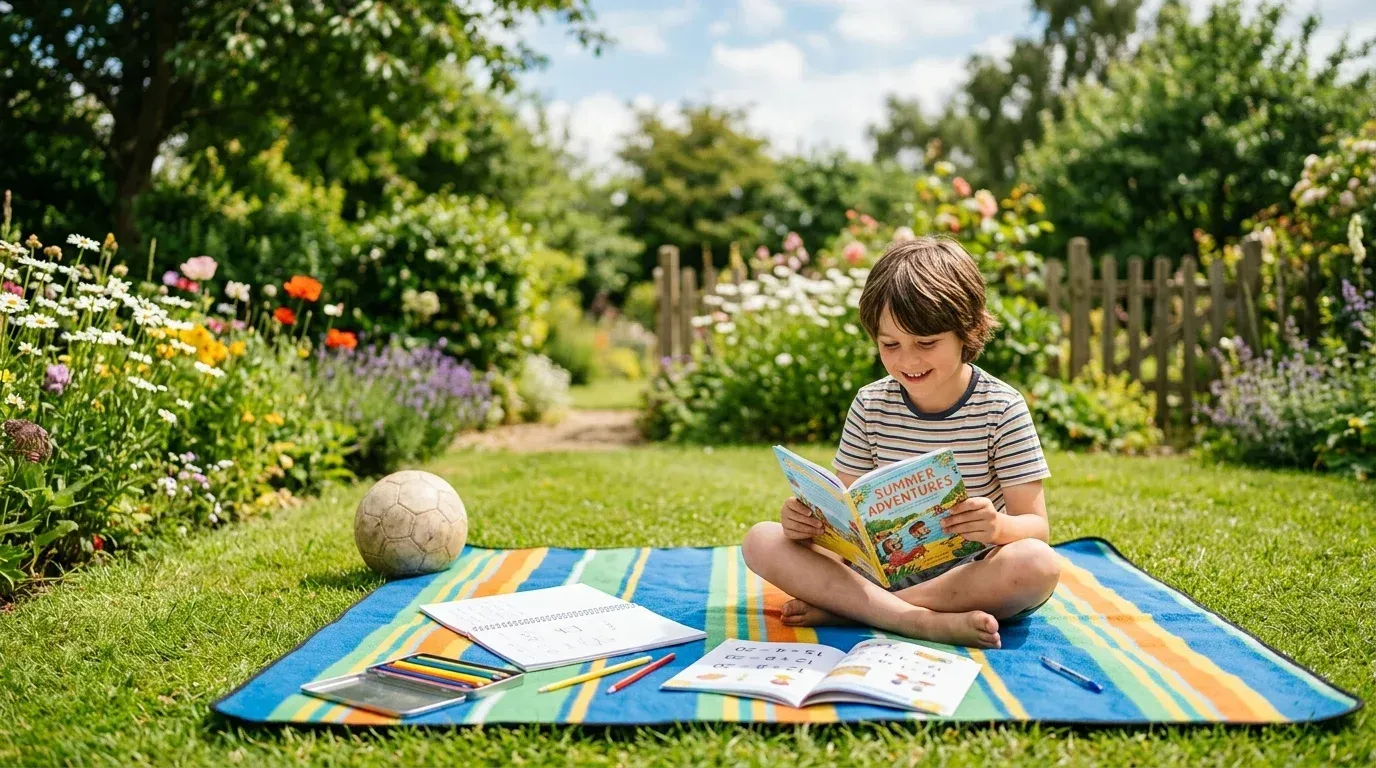
  • In the garden
  • On long car journeys
  • At breakfast
  • In a shady spot at the park


Make books part of the everyday, just like snacks and sun cream! Keeping a book or e-reader in their bag means there’s always a chance to dive into a story—even for 5–10 minutes.


Why it works: It removes the pressure and helps kids see reading as something enjoyable, not just something “schooly.”


2. Let Them Choose (Even If It’s Silly or Slightly Gross!)

Graphic novels, joke books, fact books, football magazines—yes, they all count. If a child is choosing what they read, they’re more likely to actually do it.


Top tip: Visit your local library and let them pick out 3–5 books, no judgment. You might be surprised what catches their eye.


Why it works: Ownership = motivation. A book they love will get read more than one they’re “supposed” to read.


3. Build a Simple “Reading Tracker” (With Rewards!)

Create a fun tracker for each book or chapter read. This could be:

  • A colouring-in chart
  • A sticker reward system
  • A paper chain that grows with each book

Add a small prize every 5–10 reads—a trip to the park, a new bookmark, or a treat of their choice.


Why it works: It turns reading into a game with visual progress, which helps build a habit through consistency.


4. Read Aloud Together—Yes, Even for Older Children


Many KS2 and even KS3 students still enjoy being read to. Choose a book you’ll both enjoy and take turns reading a few pages out loud each day.

You’ll be modelling fluency, expression, and vocabulary—all while bonding.


Why it works: It keeps reading social and helps boost comprehension through discussion and shared experience.


5. Talk About Books Like They’re Films

When a child finishes a book, ask them:

  • What was the best part?
  • Who was your favourite character?
  • Would you recommend it to a friend?


Make books feel like stories worth talking about, not just assignments to tick off.


Why it works: Encouraging children to reflect on what they’ve read builds comprehension and emotional connection to books.


Final Thought: It Doesn’t Have to Be Perfect—It Just Has to Happen

Reading over the holidays isn’t about setting huge goals or finishing a library’s worth of books. It’s about gently keeping the brain ticking over, feeding imagination, and giving kids a head start for September.

If you’d like personalised support with reading, phonics, comprehension or confidence, our tutoring team is here to help—online or in person. Just drop us a message!

by Mark Day 28 May 2026
Simple ways to help your Year 6 child feel confident, organised and secondary ready before starting Year 7 in September.
Five children sitting and reading books with colorful covers outdoors.
by Mark Day 28 May 2026
Learn fun ways to boost your child's maths skills at home with games, cooking, and DIY projects. Start supporting their learning today!
by Mark Day 27 April 2026
Learn how to support your child’s calmness & confidence during SATs week. Discover tips for a stable home, sleep, & breakfast.
by Mark Day 29 March 2026
Learn why writing is a struggle in KS2. Get expert support to improve your child's writing skills today!
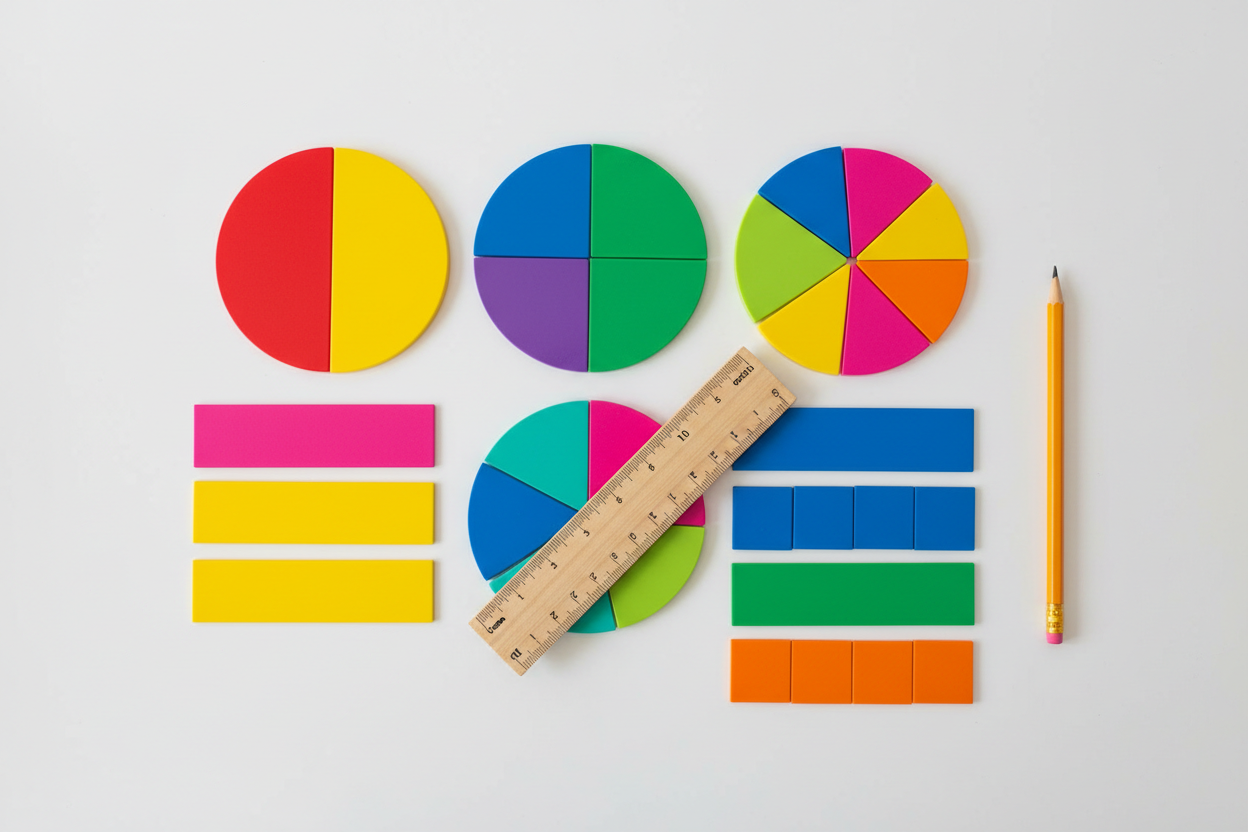
Fraction manipulatives including circles and rectangles in various colors, ruler, and pencil on white background.
by Mark Day 1 March 2026
Learn why KS2 children struggle with fractions & discover effective tutoring strategies to enhance their maths skills. Contact us today!
Woman and child at table, looking down at papers and phone. The woman is holding a phone, and they appear to be working together.
by Mark Day 25 January 2026
Understand KS2 SATs for Year 6 students. Get tips to support your child & reduce stress. Contact us for tutoring help!
Man in glasses helping a boy with homework at a table. Both are looking at the book.
by Mark Day 28 December 2025
Learn how KS2 tutors support children in Years 3-6. Boost confidence & understanding. Contact us for tailored tutoring today!
Santa Claus reading a scroll in front of a Christmas tree and fireplace, cozy setting.
by Mark Day 28 November 2025
Learn time management lessons from Father Christmas. Start early, make lists, and stay focused for academic success!
by Mark Day 29 October 2025
As a tutor working with a range children, I see it happen all the time. A child gets a maths question wrong, and immediately their face falls. They either hurriedly cross out their work furiously, scrunch up the paper, or worst of all – they say those three words that make my heart sink: "I'm so stupid." But here's what I want every child (and parent!) to understand: mistakes aren't the enemy of learning – they're the very foundation of it. The Rubber Mentality Think about it. Every pencil case in every classroom across the UK contains a rubber. Not as a backup plan, but as an essential tool. We expect children to make mistakes. We plan for them. Yet somehow, we've created a culture where getting something wrong feels like failure rather than progress. The truth is, our brains learn far more from getting something wrong than getting it right first time. When we make a mistake, our brain sits up and pays attention. It creates stronger neural pathways as it works to understand what went wrong and how to fix it. Scientists call this "productive failure" – and it's one of the most powerful learning tools we have. Real Learning Looks Messy I often tell my students: if your page looks perfect, you probably haven't challenged yourself enough today. Real learning is messy. It's filled with crossings out, second attempts, and "wait, let me try that again." It's the child who confidently declares 7 x 8 = 54, realizes it doesn't feel quite right, works it through again, and discovers it's actually 56. That moment of correction? That's when the real learning happens. In our tutoring sessions, we embrace mistakes. When a child gets something wrong, we don't move on quickly or pretend it didn't happen. We lean into it. We explore it together: "That's interesting – what made you think that?" "Can you show me how you worked that out?" "Brilliant! You've found something we need to understand better." The Growth Mindset Difference Children who are praised for being "clever" or "smart" often become afraid of making mistakes. After all, if you're supposed to be clever, getting things wrong feels like proof you're not. This is what psychologist Carol Dweck calls a "fixed mindset" – the belief that our abilities are set in stone. But children who develop a "growth mindset" understand that their abilities can improve with effort and practice. They see mistakes not as evidence of failure, but as stepping stones to success. And the difference in their learning journey is remarkable. When I work with a new student, one of my early goals is helping them shift from "I can't do this" to "I can't do this yet." That one small word – yet – changes everything. What This Looks Like in Practice Here are some of the ways I help children embrace mistakes in their learning: Mistake of the Week: We look at a common mistake together and unpick why it happens. This normalizes errors and helps children realize everyone makes them – even their tutor! Show Your Working: I always encourage children to show their working out, even if they get the final answer wrong. This helps them (and me) see exactly where their thinking went astray, making it much easier to correct. The "What If" Game: When a child makes a mistake, we play "what if" – what if this answer was right, what would the question need to be? This helps them understand the logic behind their error. Celebrate Effort Over Outcome: I make a point of praising the process, not just the result. "I love how you tried three different strategies there" matters more than "Well done for getting it right." A Message for Parents If you're a parent reading this, here's my advice: resist the urge to jump in and correct every mistake your child makes. When they bring home homework covered in corrections from school, don't focus on what they got wrong. Instead, ask: "What did you learn today?" "What was tricky?" "What mistakes helped you understand something better?" And perhaps most importantly, share your own mistakes. Let them see you get things wrong and figure them out. Model the behaviour you want them to develop. The Long Game The children I work with aren't just learning maths, English, and reasoning skills. They're learning how to learn. They're developing resilience, problem-solving abilities, and the confidence to tackle challenges head-on. The child who can look at a page of 'red pen' corrections and say "Great! Now I know what to work on" is developing a skill that will serve them far beyond their exams. They're learning that difficulty isn't a dead end – it's a signpost showing them where to focus their effort. Moving Forward So the next time your child makes a mistake – whether in tutoring, at school, or at home – pause before you correct it. Ask them what they think. Give them space to figure it out. Let them experience that wonderful "aha!" moment when the penny drops. Because here's the beautiful truth: every mistake is simply an opportunity we haven't unwrapped yet. And that's not just good teaching – that's good life advice. Looking for tutoring support that focuses on building confidence as well as capability? I work with KS2 children, helping them develop the skills and mindset they need to thrive. Get in touch to find out more.
Close-up of a map, focusing on
by Mark Day 22 September 2025
Engage Key Stage 2 students with fun outings in Waltham Abbey. Boost maths & literacy skills while enjoying local attractions!