KS2 Reading Lists That Make Reading Fun – Even for Reluctant Readers

Mark Day • 22 July 2025

Engaging books that can spark a love of reading this summer

Summer is the perfect time to help children discover the joy of reading – especially if they’ve been reluctant to pick up a book during term time. Whether your child is an avid reader or someone who’d rather do anything else, the right book can make all the difference.

As a KS2 tutor, I’ve seen first-hand how finding the right story can transform reading from a chore into a joy. Below, I’ve compiled a list of tried-and-tested favourites – with plenty of options for boys, girls, and every type of young reader.


Why Reading Over Summer Matters

Many children experience the “summer slide” – a dip in skills and confidence when learning routines are paused. But just 15–20 minutes of reading a day can help them:

  • Improve vocabulary and comprehension
  • Boost imagination and creativity
  • Feel more confident returning to school in September


Great Books for KS2 Readers (Ages 7–11)


πŸ§™‍♂️ 1. “The Wizards of Once” by Cressida Cowell

Adventure, magic, humour – and a touch of danger
Perfect for fans of Harry Potter, this fast-paced fantasy adventure follows a wizard boy and a warrior girl on an unlikely quest. Great for reluctant readers thanks to short chapters and exciting illustrations.


πŸ•΅οΈ‍♀️ 2. “Anisha, Accidental Detective” by Serena Patel

Mystery, family drama, and big laughs
When Anisha’s aunt’s wedding is nearly sabotaged, she must solve the mystery in time to save the day. A witty and fast-moving book that’s great for children who love a bit of chaos and fun.


🧟‍♂️ 3. “Tom Gates” series by Liz Pichon

Laugh-out-loud humour with doodles and diary entries
With short chapters, drawings, and funny storylines, these books are perfect for reluctant readers – especially boys. Great for fans of “Wimpy Kid” style storytelling.


πŸ‘» 4. “Isadora Moon” series by Harriet Muncaster

Half fairy, half vampire, all fun! 

Perfect for younger KS2 children, especially girls who love a little sparkle and a bit of mischief. The illustrations are enchanting and the stories are full of heart.


πŸ¦• 5. “The Boy Who Grew Dragons” by Andy Shepherd

A boy discovers a dragon plant – and chaos follows
This gentle fantasy is packed with adventure and humour, with short, manageable chapters that make it ideal for reluctant or newer readers.


🧚‍♀️ 6. “Rainbow Grey” by Laura Ellen Anderson

A weather-controlling girl tries to save the world
Packed with colourful illustrations and a fast-paced story. Great for confident readers who still love visual storytelling.


πŸš€ 7. “Planet Omar” series by Zanib Mian

Funny, thoughtful stories told through Omar’s eyes
These books explore everyday life, school, family, and faith – with a lot of humour and heart. Brilliant for sparking empathy and curiosity in KS2 readers.


🎯 Tips for Encouraging Summer Reading

  • Let them choose. Children are more likely to read what they pick themselves.
  • Set a relaxed routine. 15 minutes before bed or after breakfast works well.
  • Use audiobooks. Great for long car rides and reluctant readers – they still count!
  • Make it social. Start a mini summer reading challenge with friends or family.


πŸ“ Final Thoughts

Not every child will instantly fall in love with books – and that’s okay. But with the right story, even reluctant readers can find the joy in getting lost in a book. If you'd like more personalised reading suggestions or support with your child’s learning over the summer, feel free to get in touch!

ο»Ώ

Happy reading! β˜€οΈπŸ“–

by Mark Day 24 August 2026
Starting secondary school is a major milestone. For many children, the first few days of Year 7 are exciting. There are new classrooms, new teachers, new subjects and often new friends too. But once the first-week excitement has faded, the reality of secondary school can begin to feel more demanding. This is completely normal. The first half-term is a big adjustment. Children are learning how to navigate a larger school, follow a timetable, manage homework and become more independent. Some will settle quickly. Others may need a little more time, reassurance and support. Here is what parents can expect during the first half-term of Year 7 — and how you can help your child feel more confident as they settle in. 1. Your child may be more tired than usual Secondary school days can feel long. Children are concentrating on new lessons, moving around a bigger building, meeting different teachers and remembering new routines. Even children who seem happy at school may come home tired, quiet or a little irritable. This does not always mean that something is wrong. It often means they are using a lot of energy to adjust. Try to keep after-school time calm where possible. A snack, a drink and a little time to relax before homework can make a big difference. Sleep is important too. A consistent bedtime routine can help children feel more rested and ready for the next day. 2. Organisation can be a challenge at first At primary school, children are often reminded about what they need to do. At secondary school, they are expected to remember more for themselves. That might include: checking their timetable bringing the correct books and equipment completing homework remembering PE kit keeping track of school messages getting ready for the next day It can feel like a lot. A simple evening routine can help. Encourage your child to check their timetable, pack their bag and get their uniform ready before bed. A checklist can be useful in the first few weeks. The aim is not to do everything for them. It is to help them build habits they can manage independently over time. 3. Homework may feel different One of the biggest changes in Year 7 is homework. Children may have tasks from several subjects at once. They may need to use a planner, online platform or school app to keep track of deadlines. At first, this can feel overwhelming. Some children will say they have no homework because they have forgotten to write it down. Others may leave it until the last minute because they do not know where to begin. Try to create a regular homework routine. This could mean a short, quiet period after school or after dinner. Keep the space calm and free from distractions if possible. If a task feels large, help your child break it into smaller steps. For example: Read the task carefully. Decide what equipment is needed. Spend ten minutes making a start. Take a short break. Return to it if needed. A little structure can make homework feel far more manageable. 4. Friendships may take time to settle Friendships can change when children move to secondary school. Some children arrive with familiar friends. Others may be placed in tutor groups with children they do not know well. It is common for friendships to shift during the first few weeks. Try not to panic if your child does not immediately have a close friendship group. Making friends takes time. Encourage them to be friendly, join in and speak to different people. Clubs, sports and lunchtime activities can also help children meet others with similar interests. If they are worried about friendships, listen first. Avoid dismissing their concerns, even if they seem small to you. Feeling heard can be very reassuring. 5. Confidence can dip before it grows A child who felt confident in Year 6 may suddenly feel less sure of themselves in Year 7. They are no longer one of the oldest children in school. The work may feel harder. Lessons may move faster. They may be surrounded by new people. This can lead to comments such as: “I’m not good at maths.” “Everyone else understands it.” “I don’t know what I’m doing.” “I hate homework.” Try to remind your child that no one is expected to know everything straight away. The first half-term is about learning how secondary school works. Praise effort, organisation and perseverance, rather than focusing only on results. A child who keeps trying and asks for help is making progress, even when they do not feel confident yet. 6. Keep communication open Many children will not give long answers when asked, “How was school?” Try asking more specific questions instead. For example: What was the best part of your day? Which lesson felt easiest today? Was there anything that felt tricky? Who did you sit with at lunch? What do you need to remember for tomorrow? Is there anything you would like help with? These questions can make it easier for your child to talk. They also give you a clearer sense of how they are settling in. Try to make these conversations feel relaxed rather than like an interrogation. A chat in the car, while cooking dinner or before bed may work better than a formal question-and-answer session. 7. Watch for signs your child may need extra support A difficult day now and then is normal. But it may be worth looking more closely if your child seems unhappy or overwhelmed for several weeks. You may notice that they are: regularly avoiding homework becoming very anxious about school losing confidence in a particular subject struggling to stay organised saying they do not understand the work becoming upset or frustrated by small tasks It can help to speak to the school if you have concerns. Sometimes a small issue can be resolved quickly with the right information or support. For some children, a little extra help outside school can also be useful. A calm, individual approach can give children time to revisit tricky areas, ask questions without pressure and rebuild confidence in key subjects. 8. Give them time to adjust The first half-term of Year 7 is not about getting everything right. It is about settling in. Your child is learning a new routine, a new environment and a new level of independence. There will probably be forgotten books, confusing homework tasks and days that feel more difficult than others. That is all part of the process. Try to focus on small wins. Perhaps they found their way around school without help.Maybe they remembered their PE kit, completed homework independently or spoke to someone new. These small steps build confidence over time. How Secondary Ready tutoring can help The move from Year 6 to Year 7 does not end on the first day of term. For many children, the first half-term is when they begin to notice which subjects feel more challenging and where they need more support. Secondary Ready tutoring can provide a calm bridge between primary school and Year 7. Sessions can help children: strengthen key maths and English skills build confidence in asking questions develop homework and study habits become more organised approach Year 7 work with less stress At Empower Tutoring in Waltham Abbey, Essex , support is tailored to the child. The aim is not to add pressure. It is to help children feel more secure, capable and ready to make the most of secondary school. Just get in touch if you would like to find out more about tutoring support in Year 7. Some Final thoughts Starting Year 7 is a big change. It is normal for children to feel excited one day and unsure the next. The most helpful thing parents can offer is calm support, realistic expectations and time to adjust. With the right routines, encouragement and a little help when needed, most children grow in confidence as the weeks go by.
Child smiling at a desk, writing in an open notebook with pencils and books nearby.
by Mark Day 4 August 2026
Is your child ready for September? Learn how to support your child's return to school and find out how targeted KS2 & Year 7 tutoring can provide a confidence boost.
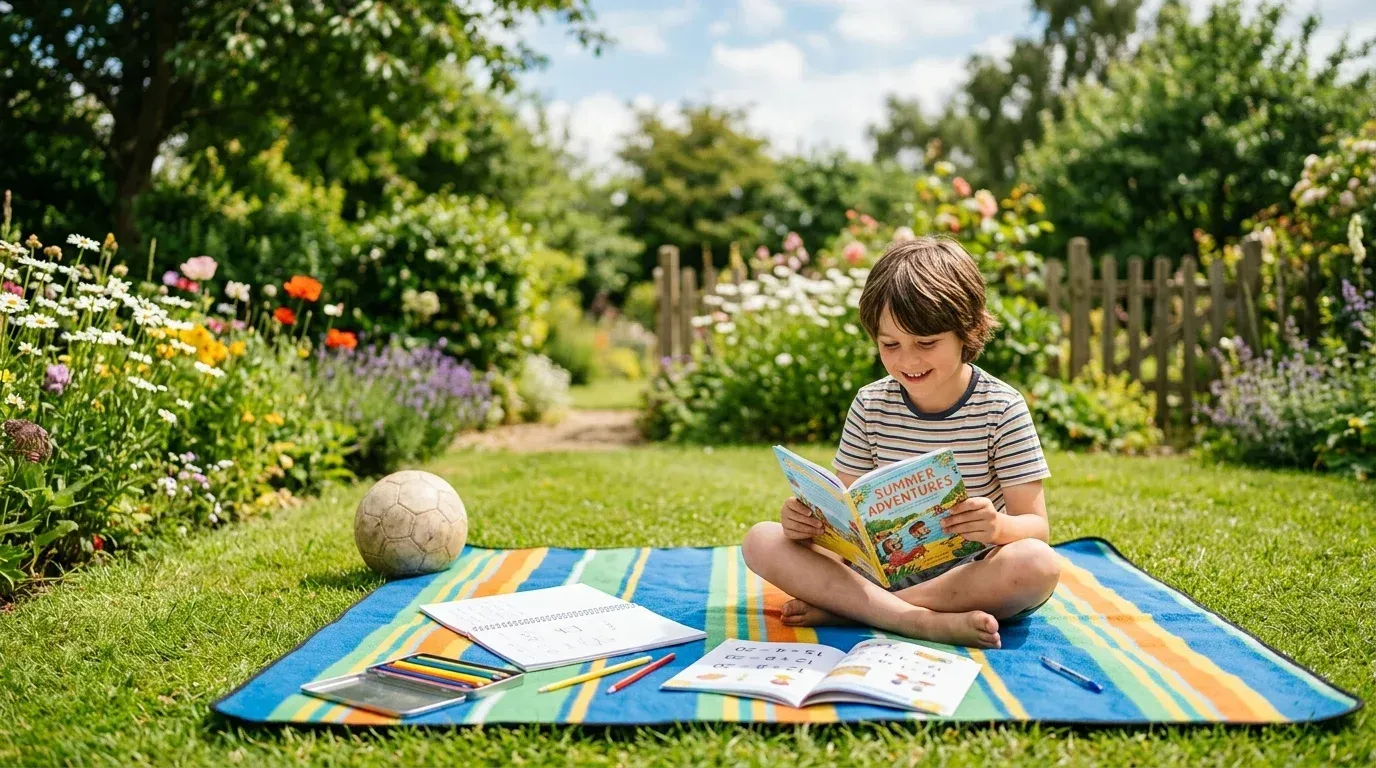
Child reading on a blue picnic blanket in a sunny garden, with papers and a ball nearby.
by Mark Day 3 July 2026
Help your Year 6 child prepare for secondary school with practical tips on confidence, routines, organisation and key skills for a smoother Year 7 transition.
by Mark Day 28 May 2026
Simple ways to help your Year 6 child feel confident, organised and secondary ready before starting Year 7 in September.
Five children sitting and reading books with colorful covers outdoors.
by Mark Day 28 May 2026
Learn fun ways to boost your child's maths skills at home with games, cooking, and DIY projects. Start supporting their learning today!
by Mark Day 27 April 2026
Learn how to support your child’s calmness & confidence during SATs week. Discover tips for a stable home, sleep, & breakfast.
by Mark Day 29 March 2026
Learn why writing is a struggle in KS2. Get expert support to improve your child's writing skills today!
Fraction manipulatives including circles and rectangles in various colors, ruler, and pencil on white background.
by Mark Day 1 March 2026
Learn why KS2 children struggle with fractions & discover effective tutoring strategies to enhance their maths skills. Contact us today!
Woman and child at table, looking down at papers and phone. The woman is holding a phone, and they appear to be working together.
by Mark Day 25 January 2026
Understand KS2 SATs for Year 6 students. Get tips to support your child & reduce stress. Contact us for tutoring help!
Man in glasses helping a boy with homework at a table. Both are looking at the book.
by Mark Day 28 December 2025
Learn how KS2 tutors support children in Years 3-6. Boost confidence & understanding. Contact us for tailored tutoring today!