The Benefits of Learning a Second Language

Mark Day • 18 October 2024

Advantages of Learning a Second Language for Children

In today’s interconnected world, multilingualism is more than just a valuable skill—it’s a gateway to cultural understanding, cognitive development, and academic success. Introducing children to a second language early in life opens up opportunities that extend far beyond the classroom. Whether through formal education or exposure at home, learning a second language offers numerous benefits for a child’s cognitive, social, and emotional growth. Here’s why embracing bilingualism is one of the greatest gifts we can offer the next generation.


Boosts Cognitive Development

One of the most significant benefits of learning a second language is the profound impact it has on cognitive abilities. Numerous studies have shown that bilingual children tend to outperform their monolingual peers in tasks requiring problem-solving, critical thinking, and creativity. Learning two languages requires children to constantly switch between different language systems, enhancing their multitasking abilities and improving their overall brain function.


For example, when a child navigates between two languages, they develop better memory skills and more robust executive functions. This includes improved focus, mental flexibility, and the ability to ignore distractions, which can greatly enhance academic performance in all subjects—not just language-related ones.


Improves Academic Achievement

Bilingual children often show an academic edge in various areas, particularly in reading, writing, and mathematics. Learning a second language improves a child’s understanding of their native language as well, sharpening their grammar, vocabulary, and literacy skills. This heightened awareness of language structures translates into better reading comprehension and writing abilities in both languages.


Additionally, studies have found that children who speak multiple languages tend to perform better on standardized tests, particularly in verbal sections, due to their enhanced language and problem-solving skills.


Enhances Social and Cultural Awareness

Language is deeply tied to culture. When children learn a second language, they also learn about the customs, traditions, and history associated with that language. This fosters empathy, open-mindedness, and a broader worldview. Children who are exposed to different cultures early on are more likely to appreciate diversity, feel more comfortable interacting with people from different backgrounds, and develop cross-cultural communication skills that will serve them well in a globalized world.


Multilingualism can also help children form connections with relatives or communities who speak the language, strengthening family bonds and giving them a sense of identity and heritage.


Increases Future Career Opportunities

In an increasingly globalized job market, bilingualism is a highly sought-after skill. By learning a second language early in life, children are setting themselves up for success in a wide range of careers. From international business and diplomacy to translation, tourism, and education, the ability to communicate in multiple languages opens doors to exciting professional opportunities.


Even in fields where language skills may not seem immediately relevant, employers often value bilingual individuals for their enhanced cognitive abilities, problem-solving skills, and adaptability.


Fosters Lifelong Learning and Adaptability

Introducing children to a second language early on also promotes a love of learning. Language learning involves more than memorizing vocabulary and grammar rules—it teaches patience, persistence, and the joy of mastering a complex skill over time. Children who learn one additional language are often more inclined to pick up others later in life, as their brain becomes adept at recognizing patterns and adapting to new linguistic structures.


This adaptability can extend to other areas of life as well, helping children develop resilience and an openness to new experiences and challenges.


Strengthens Emotional Intelligence

Mastering a second language involves understanding not just words but also the social and emotional context in which they are used. Bilingual children often develop strong emotional intelligence because they must navigate different cultural norms, tones, and expressions in various settings. They become more sensitive to the emotions of others and develop better communication skills.


Furthermore, being able to express oneself in multiple languages can enhance a child’s sense of identity and self-esteem. For children growing up in multilingual households, learning both their heritage language and the dominant language of their environment can provide them with a stronger sense of belonging.


Encourages Brain Health in the Long Term

The benefits of bilingualism extend well beyond childhood. Research has shown that being fluent in more than one language can delay the onset of age-related cognitive decline, including conditions like Alzheimer’s and dementia. This is because the brain stays active and engaged, constantly exercising its memory, attention, and problem-solving skills through the use of multiple languages.


By giving children the gift of bilingualism early in life, parents and educators are not only enhancing their cognitive abilities in the short term but also contributing to their long-term brain health.


Learning a second language offers children a world of advantages, from cognitive and academic growth to enhanced social and emotional intelligence. It builds bridges between cultures, sharpens the mind, and lays the foundation for a successful future. In an ever-evolving, interconnected world, bilingualism isn’t just an asset—it’s a necessity. By fostering language learning in children, we are preparing them to thrive in a diverse, global society while enriching their lives with the joy of cultural understanding and lifelong learning. 


So, whether through formal classes, immersion programs, or language games at home, encouraging children to learn a second language is one of the most valuable investments we can make in their future.
by Mark Day 28 May 2026
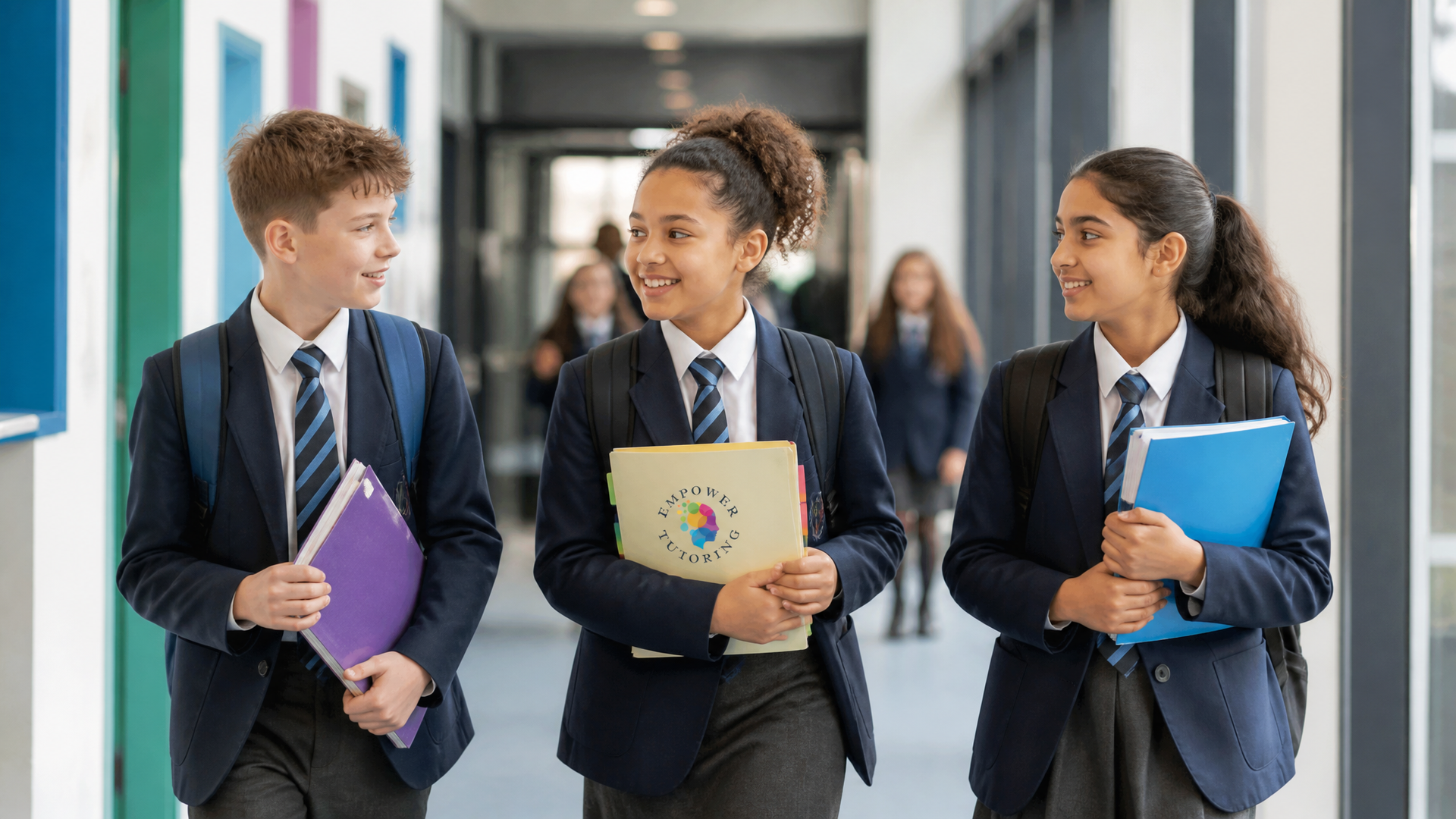
Simple ways to help your Year 6 child feel confident, organised and secondary ready before starting Year 7 in September.
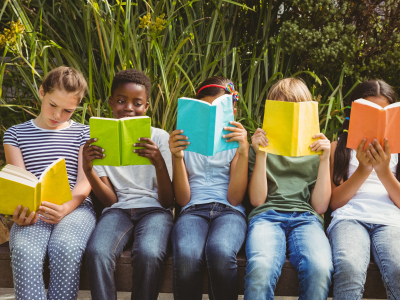
Five children sitting and reading books with colorful covers outdoors.
by Mark Day 28 May 2026
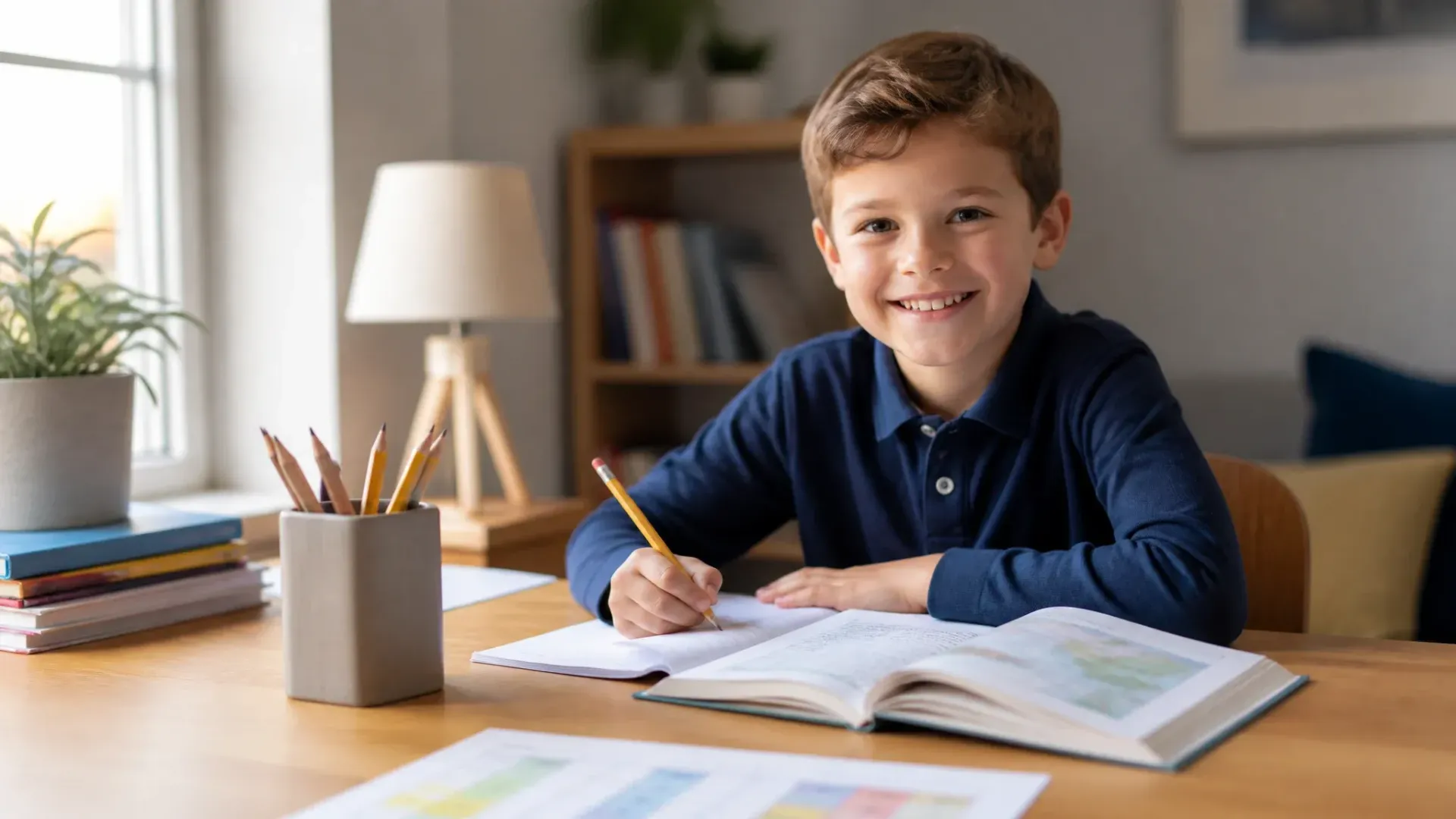
Learn fun ways to boost your child's maths skills at home with games, cooking, and DIY projects. Start supporting their learning today!
by Mark Day 27 April 2026
Learn how to support your child’s calmness & confidence during SATs week. Discover tips for a stable home, sleep, & breakfast.
by Mark Day 29 March 2026
Learn why writing is a struggle in KS2. Get expert support to improve your child's writing skills today!
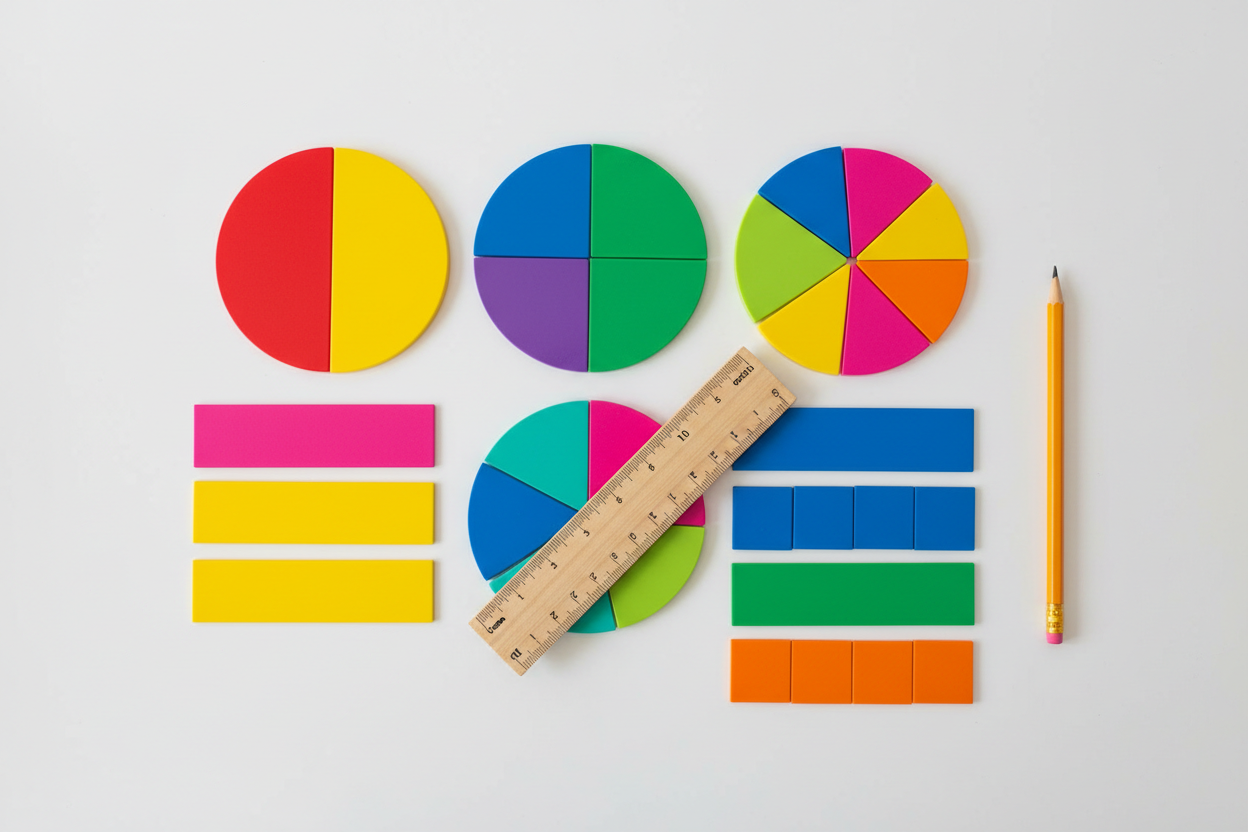
Fraction manipulatives including circles and rectangles in various colors, ruler, and pencil on white background.
by Mark Day 1 March 2026
Learn why KS2 children struggle with fractions & discover effective tutoring strategies to enhance their maths skills. Contact us today!
Woman and child at table, looking down at papers and phone. The woman is holding a phone, and they appear to be working together.
by Mark Day 25 January 2026
Understand KS2 SATs for Year 6 students. Get tips to support your child & reduce stress. Contact us for tutoring help!
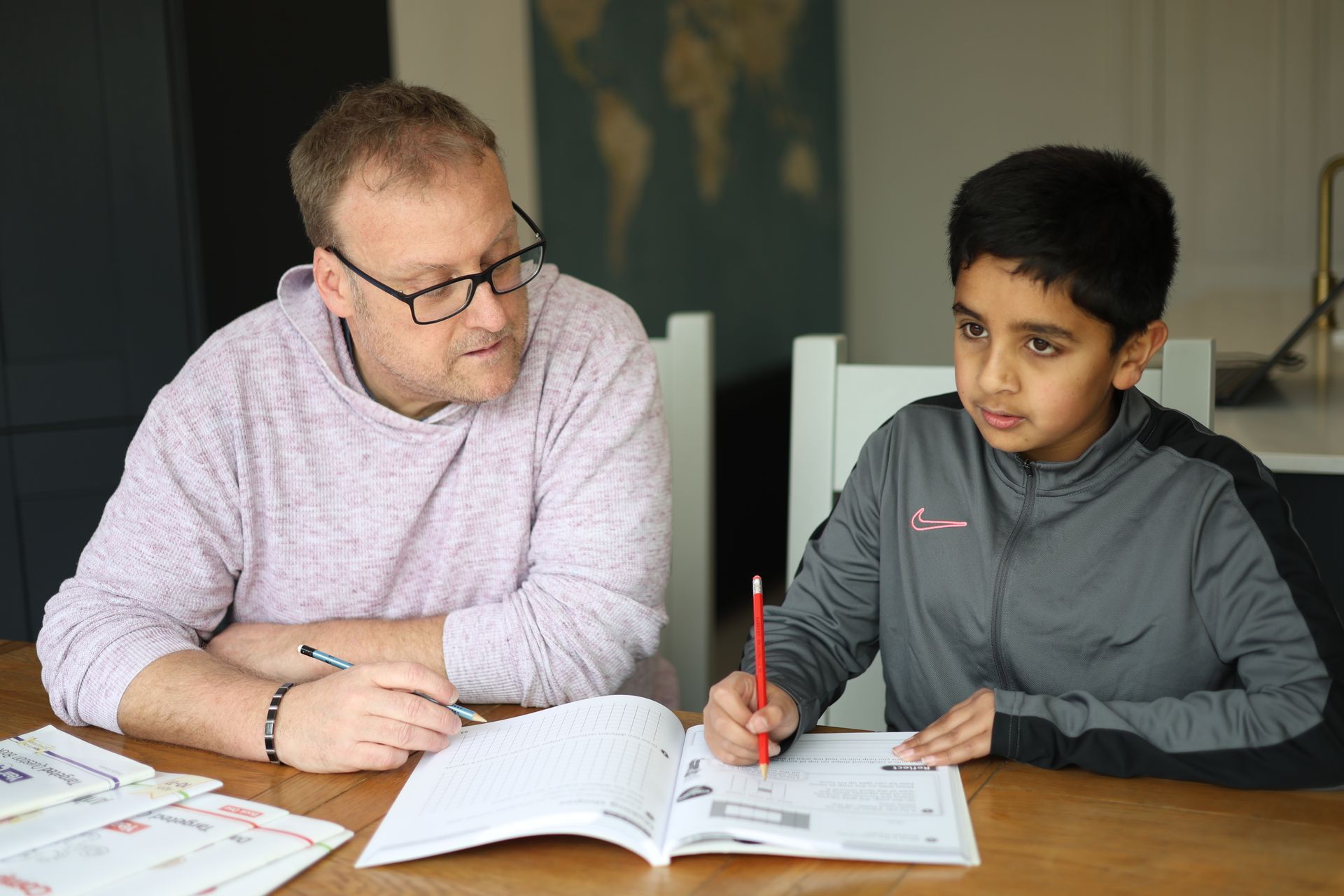
Man in glasses helping a boy with homework at a table. Both are looking at the book.
by Mark Day 28 December 2025
Learn how KS2 tutors support children in Years 3-6. Boost confidence & understanding. Contact us for tailored tutoring today!
Santa Claus reading a scroll in front of a Christmas tree and fireplace, cozy setting.
by Mark Day 28 November 2025
Learn time management lessons from Father Christmas. Start early, make lists, and stay focused for academic success!
by Mark Day 29 October 2025
As a tutor working with a range children, I see it happen all the time. A child gets a maths question wrong, and immediately their face falls. They either hurriedly cross out their work furiously, scrunch up the paper, or worst of all – they say those three words that make my heart sink: "I'm so stupid." But here's what I want every child (and parent!) to understand: mistakes aren't the enemy of learning – they're the very foundation of it. The Rubber Mentality Think about it. Every pencil case in every classroom across the UK contains a rubber. Not as a backup plan, but as an essential tool. We expect children to make mistakes. We plan for them. Yet somehow, we've created a culture where getting something wrong feels like failure rather than progress. The truth is, our brains learn far more from getting something wrong than getting it right first time. When we make a mistake, our brain sits up and pays attention. It creates stronger neural pathways as it works to understand what went wrong and how to fix it. Scientists call this "productive failure" – and it's one of the most powerful learning tools we have. Real Learning Looks Messy I often tell my students: if your page looks perfect, you probably haven't challenged yourself enough today. Real learning is messy. It's filled with crossings out, second attempts, and "wait, let me try that again." It's the child who confidently declares 7 x 8 = 54, realizes it doesn't feel quite right, works it through again, and discovers it's actually 56. That moment of correction? That's when the real learning happens. In our tutoring sessions, we embrace mistakes. When a child gets something wrong, we don't move on quickly or pretend it didn't happen. We lean into it. We explore it together: "That's interesting – what made you think that?" "Can you show me how you worked that out?" "Brilliant! You've found something we need to understand better." The Growth Mindset Difference Children who are praised for being "clever" or "smart" often become afraid of making mistakes. After all, if you're supposed to be clever, getting things wrong feels like proof you're not. This is what psychologist Carol Dweck calls a "fixed mindset" – the belief that our abilities are set in stone. But children who develop a "growth mindset" understand that their abilities can improve with effort and practice. They see mistakes not as evidence of failure, but as stepping stones to success. And the difference in their learning journey is remarkable. When I work with a new student, one of my early goals is helping them shift from "I can't do this" to "I can't do this yet." That one small word – yet – changes everything. What This Looks Like in Practice Here are some of the ways I help children embrace mistakes in their learning: Mistake of the Week: We look at a common mistake together and unpick why it happens. This normalizes errors and helps children realize everyone makes them – even their tutor! Show Your Working: I always encourage children to show their working out, even if they get the final answer wrong. This helps them (and me) see exactly where their thinking went astray, making it much easier to correct. The "What If" Game: When a child makes a mistake, we play "what if" – what if this answer was right, what would the question need to be? This helps them understand the logic behind their error. Celebrate Effort Over Outcome: I make a point of praising the process, not just the result. "I love how you tried three different strategies there" matters more than "Well done for getting it right." A Message for Parents If you're a parent reading this, here's my advice: resist the urge to jump in and correct every mistake your child makes. When they bring home homework covered in corrections from school, don't focus on what they got wrong. Instead, ask: "What did you learn today?" "What was tricky?" "What mistakes helped you understand something better?" And perhaps most importantly, share your own mistakes. Let them see you get things wrong and figure them out. Model the behaviour you want them to develop. The Long Game The children I work with aren't just learning maths, English, and reasoning skills. They're learning how to learn. They're developing resilience, problem-solving abilities, and the confidence to tackle challenges head-on. The child who can look at a page of 'red pen' corrections and say "Great! Now I know what to work on" is developing a skill that will serve them far beyond their exams. They're learning that difficulty isn't a dead end – it's a signpost showing them where to focus their effort. Moving Forward So the next time your child makes a mistake – whether in tutoring, at school, or at home – pause before you correct it. Ask them what they think. Give them space to figure it out. Let them experience that wonderful "aha!" moment when the penny drops. Because here's the beautiful truth: every mistake is simply an opportunity we haven't unwrapped yet. And that's not just good teaching – that's good life advice. Looking for tutoring support that focuses on building confidence as well as capability? I work with KS2 children, helping them develop the skills and mindset they need to thrive. Get in touch to find out more.
Close-up of a map, focusing on
by Mark Day 22 September 2025
Engage Key Stage 2 students with fun outings in Waltham Abbey. Boost maths & literacy skills while enjoying local attractions!